
LinkedIn Meeting Asks You to Paste Terminal Commands?
LinkedIn meeting claims audio failure then a fake Teams page asks for Terminal paste? Stop, do not paste, and clean the device if commands already ran.

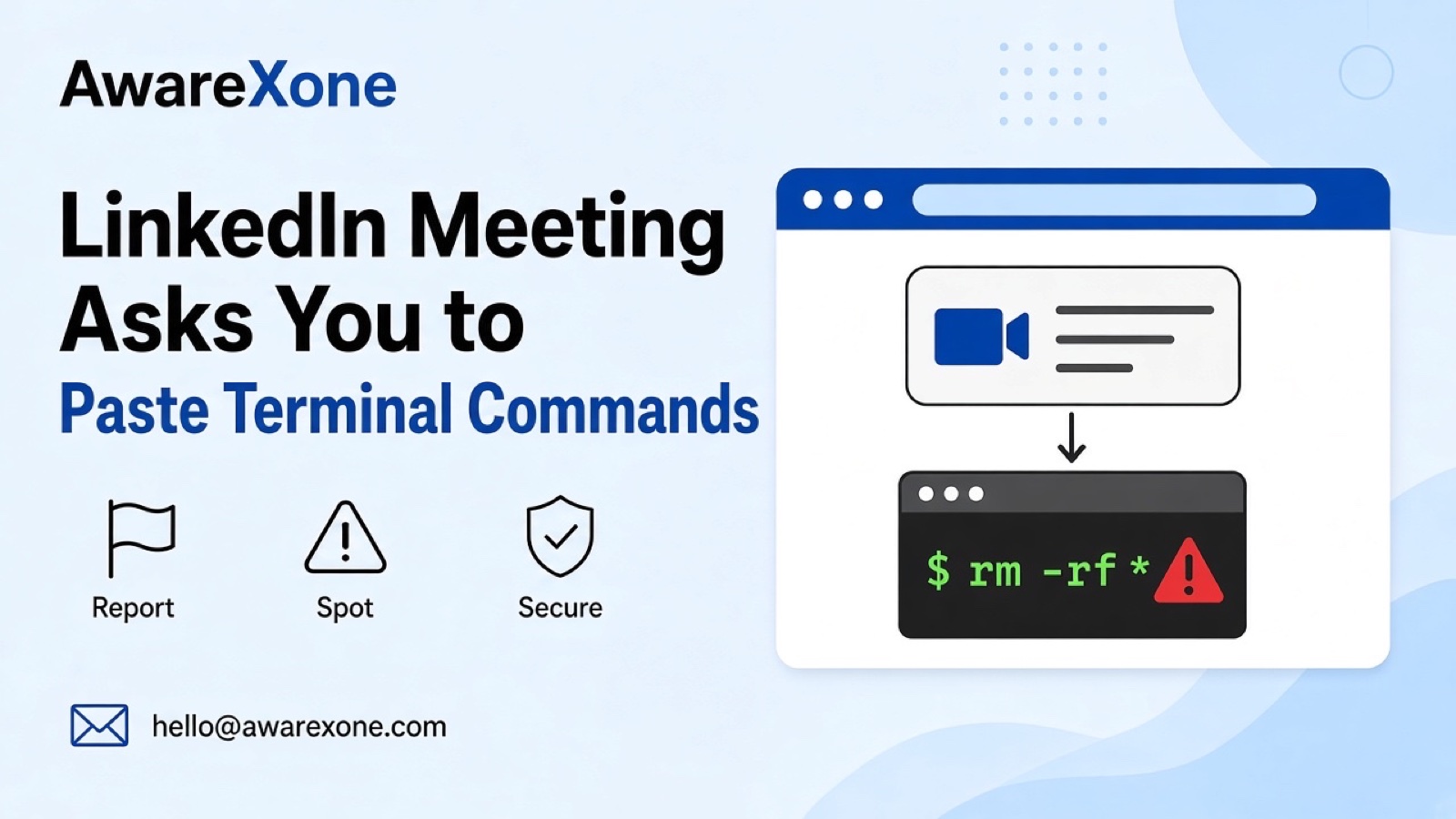
Short answer
If a LinkedIn meeting says it cannot hear you then asks you to paste Terminal commands on a fake Teams page, leave the call and do not paste anything. Report the LinkedIn profile if needed, secure LinkedIn, and run clean-device password resets if commands already ran. This is ClickFix malware, not a normal audio fix.
Summary- A late October 2026 LinkedIn post by Soren Azorian described a ClickFix path from a booked call into a fake Teams page that pushed Terminal paste.
- LinkedIn Help covers compromised accounts, phishing content reporting, and recognising common scam patterns.
- This is device malware social engineering, not a LinkedIn password theft article.
- Red flags include odd Teams hosts and any request to paste commands from chat.
- One wrong step can cost you the account, so know what you are doing before you start.
You booked a partnership call on LinkedIn. The guest says audio failed and sends a Teams style link. The page asks you to press Win+X or open Terminal and paste a command. That is not a normal Microsoft fix. You need a meeting red flag card before crypto or bank sessions on the same laptop are stolen.
Soren Azorian's LinkedIn write-up described an attacker moving off a calendar link to a fake Teams host and pushing Terminal paste ClickFix. LinkedIn's phishing content help says LinkedIn will never ask you for your password or ask you to download programs, and it explains how to report scam messages. LinkedIn's report a compromised account page covers cleanup if your own login is later abused. This guide stays on the meeting ClickFix path. For recruiter job scams see LinkedIn fake recruiter job offer scam report. One wrong step can cost you the account, so know what you are doing before you start.
Last checked: 7 November 2026.
#Quick Answer
If a LinkedIn meeting says it cannot hear you then asks you to paste Terminal commands on a fake Teams page, leave the call and do not paste anything. Report the LinkedIn profile if needed, secure LinkedIn, and run clean-device password resets if commands already ran. This is ClickFix malware, not a normal audio fix.
#ClickFix Meeting Red Flag Card
| Signal | Safer reading | Your move |
|---|---|---|
| Audio fails then a new Teams link appears in chat | Real hosts usually reschedule or use the original calendar link | Stay on the booked link or end the call |
| Domain looks like team.lives.cn.com or other odd hosts | Microsoft Teams domains do not look like random cn.com hosts | Do not sign in; close the tab |
| Page asks you to paste Terminal, PowerShell or Run commands | Legitimate meeting tools do not fix audio with pasted shell commands | Do not paste |
| Urgency about investors waiting | Pressure to skip checks | Leave the call |
| Requests for LinkedIn password inside the meeting page | LinkedIn Help says it will not ask for your password that way | Report the conversation |
#If You Already Pasted Commands
- Disconnect the laptop from the network.
- From a second clean device, change passwords for email, banking, crypto and LinkedIn.
- Turn on two factor authentication where available.
- Review LinkedIn active sessions and sign out unknown devices.
- Have IT scan or reimage the machine before you reuse it for work.
LinkedIn's recognise and report scams and security verification when signing in pages help with account side checks. For broader device steps after a bad click see Clicked a phishing link what to do.
#Report the LinkedIn Side
If the meeting started from a LinkedIn message or profile, use LinkedIn's phishing report steps on that conversation. Block the member if needed. Do not argue on the call while malware instructions sit in chat.
Fake recovery helpers may message you after you post about the incident. See Fake hackers offering account recovery.
Subscribe to receive notifications of new posts
#What Only You and IT Can Decide
LinkedIn can review reported profiles and help with compromised account forms. Device cleanup is on you and your IT provider. AwareXone does not ask you to paste commands or share screen control codes.
Train founders to keep banking tabs closed during first time partner calls.
Prefer company issued laptops with disk encryption for investor meetings.
Save the fake Teams URL text for your incident ticket without revisiting the page.
Tell the real counterparty through a known phone number that the LinkedIn guest was a fraud.
Review calendar OAuth apps that can insert events without a second check.
Malaysian remote workers with crypto hot wallets on the same machine should treat a paste as a full wallet emergency.
Write down the exact on-screen wording before you screenshot so later appeals match what the platform showed on the day you acted.
Tell close contacts through another channel that your account may send odd links until the situation is stable.
Prefer official help URLs you type yourself rather than buttons inside unexpected emails or DMs.
Keep a simple timeline with Malaysia time stamps for every password change, appeal and public warning.
If a platform offers only a limited number of reviews, use them carefully and attach only evidence you can defend.
After access returns, review connected apps and remove anything you do not recognise before you resume normal posting.
Teams should nominate one owner for the case so staff do not file conflicting appeals from different logins.
Ignore anyone who messages you offering a paid clear or a private tool. Stay on official help pages you open yourself.
Do not share your password, codes or session cookies with anyone who contacts you about this case.
Keep screenshots of every notice with the date in Malaysia time so later support chats match what you saw. Wording can vary by app and region.
If you already paid a stranger who promised a restore, stop further payments and move to bank and police reporting the same day.
Document which devices still have an active session so you can sign them out in order once you regain control.
A calm checklist beats rushing a second account that can create more policy problems.
Share only the facts your staff need. Over-sharing passwords in a group chat creates a second incident.
Founders should keep a clean laptop image ready for partnership week.
Finance should watch for new payees created in the hour after a paste incident.
Keep customer or member messages factual so copycats do not learn your internal recovery codes.
Store evidence in a shared drive your team already trusts rather than in the compromised chat thread.
If law enforcement asks for logs, hand over exports you already collected instead of improvising new captures.
Schedule a short debrief after access returns so the same bait does not work on the next shift.
Update internal playbooks with the exact Help Centre titles you used, including the read date.
When vendors ask for status, give them a single approved sentence rather than five conflicting staff replies.
Rehearse a calm public statement that avoids inventing timelines you cannot prove.
Check that billing cards tied to the account still belong to you after the incident settles.
Remove leftover recovery codes from screenshots before you file them in email.
Ask whether any contractor still has an active session on a personal phone.
Prefer daylight Malaysia hours for sensitive resets so more staff can watch the process.
If a platform shows a lesson or quiz after a lock, complete only the official in app flow.
Do not celebrate early if a temporary feature returns while a deeper appeal is still open.
Keep printer access to the incident folder limited to people who need it.
Close the loop with anyone who received a scam message from your account during the outage.
#When It Is Safer to Get Expert Help
Getting help is safer when commands already ran, when company email is on the same device, or when you cannot tell which sessions were stolen. Wrong DIY reinfection can wipe gains from a password change.
If you are unsure about any step, or the laptop holds business logins, having an experienced team check it is the safer choice. AwareXone does this work. See our account security page.
#When a Case Review Makes Sense
A case review helps when ClickFix, LinkedIn reporting and device rebuild sit together. We are a Malaysia-based team, independent of LinkedIn and Microsoft, and we use only the official routes. We do not ask for your password or codes, and we cannot promise a result. See our trust page.
#Frequently Asked Questions
Does Microsoft ask me to paste Terminal commands to fix Teams audio?
Treat any meeting page that demands shell paste as hostile. Use official Microsoft support channels you open yourself if audio fails.
Is this a LinkedIn password steal?
Not necessarily. ClickFix aims at the device. Still secure LinkedIn and report phishing.
What if I only opened the page but did not paste?
Close it, do not return, change LinkedIn password if you typed anything, and watch sessions.
Should I keep talking to the guest to gather proof?
No. Leave the call, keep screenshots you already have, and report.
How is this different from a fake recruiter job scam?
Recruiter scams have a separate article. This one is a meeting to Terminal paste malware path.
Official sources
Related guides
More free guides on the same kind of problem.
- LinkedIn Fake Recruiter Scam: How to Report It
- Old Discord Invite Opens Safeguard Then PowerShell?
- LinkedIn Restricted Email Asking You to Verify in 24 Hours?
- LinkedIn Sending Fake Recruiter Messages You Did Not Write?
- Lost Admin Access to a LinkedIn Company Page? What to Do
- Facebook Page Appeal Asks for c_user and xs Cookies?